On Voice, Ownership, and What I Won’t Give Away Again
Podcasting asks for your body and presence. But what happens when you pour that intimacy into an asset you don’t own? I’m unpacking the cost of corporate IP and why "voice is not neutral labor," inspired by my conversation on Into The Podverse.
For most of my professional life, I’ve built things that didn’t belong to me. Not out of carelessness, and not because I didn’t understand what I was doing, but because I am genuinely enthusiastic about my LOVE for what I do.
The level of delight and joy that service brings to me is everything.
And when I started working in digital spaces, there were no best practices.
I mean, in 2006 podcasting was not an “industry.”
We were all co-creating together. You bring your skill, your time, your care, and sometimes your personality, and in return you help build something bigger than yourself.
There is pride in that kind of contribution, and I still feel it — albeit, sadly, I’m a bit more jaded.
What I didn’t fully understand early on is how different that equation becomes when the work is voice-led.
Podcasting is not abstract labor. It asks for your body. It asks for presence, tone, emotional regulation, memory, and relationship.
Over time, the voice becomes familiar to people in a way that slides past logic and straight into trust. You show up in ears during commutes, dishes, grief, joy, boredom, and long stretches of quiet.
That kind of proximity changes the shape of the work, even when the legal framework stays clean and simple. Voice-led work straddles what is considered company or corporate and becomes personal, friendly, human, and accessible.
In the first decade of podcasting, creating a podcast for a company, as an independent podcaster, and even within public media was basically non-hierarchical.
We were all “the same”-ISH. Because there’s always an -ish, mkay?
That said, I spent over a decade pouring myself into a show that wasn’t mine. I was proud of it. I cared deeply about the community it served, and I believed in the value of showing up consistently and doing the work well.
Let me be clear: none of that feels false or wasted to me now.
At the same time, I can finally name the cost of that level of investment when the asset you are helping to build does not belong to you.
Ooooooooofffff.
Corporate IP is clear on paper and much more complicated in the body. When a show works because of the voice, that voice becomes part of the infrastructure, even if the ownership never changes.
The audience connects to a human presence, while the structure belongs to an organization. Living inside that tension for a long time teaches you things — especially about what you are willing to give and what you need to hold closer.
“Honestly, what makes me tear up now is realizing how much of myself I invested in a show that wasn’t mine.”
I’m stating this not because I feel regret, but because I’m finding more clarity around the whole thing. As of the time of this writing, it’s been about three months since the last episode with my voice.
I don’t look back and think I should have done everything differently. I do look back and understand that I centered my identity very deeply inside work that I could not carry forward with me, and that is a choice I would not make again without very different terms.
Voice is not neutral labor.
Let’s all say that together, out loud: voice is not neutral labor.
It is intimate, relational, and embodied.
When you lend it out, even willingly and joyfully, it leaves an imprint. Over time, the line between service and self-erosion can blur, especially for people who care deeply about the communities they serve.
Oh man. That hits hard.
I need a moment…
(I’m pausing to take a breath now)
I’ve learned that loving the work is not the same as owning the work, and that the difference matters more than I once believed.
This realization has shaped how I think about authorship in this next chapter of my life.
I’m still here. I’m still working, still mentoring, still paying attention to the patterns shaping podcasting and creative work more broadly.
What has changed is my relationship to where my voice lives and how much of myself I am willing to embed inside structures that are not mine to steward long-term.
This is not to say that I will only do things that ________.
Or that I won’t work for ________.
For me, this brings to the forefront that I do not have the luxury to do it just because I’m excited and it’s the best thing ever and I love it so much.
That was usually my M.O. Do it because the work is good.
I must challenge myself to pause and remember:
VOICE IS NOT NEUTRAL LABOR.
“I’ve learned that my voice and my ‘essence’ deserve to be mine. I’m claiming that for myself now.”
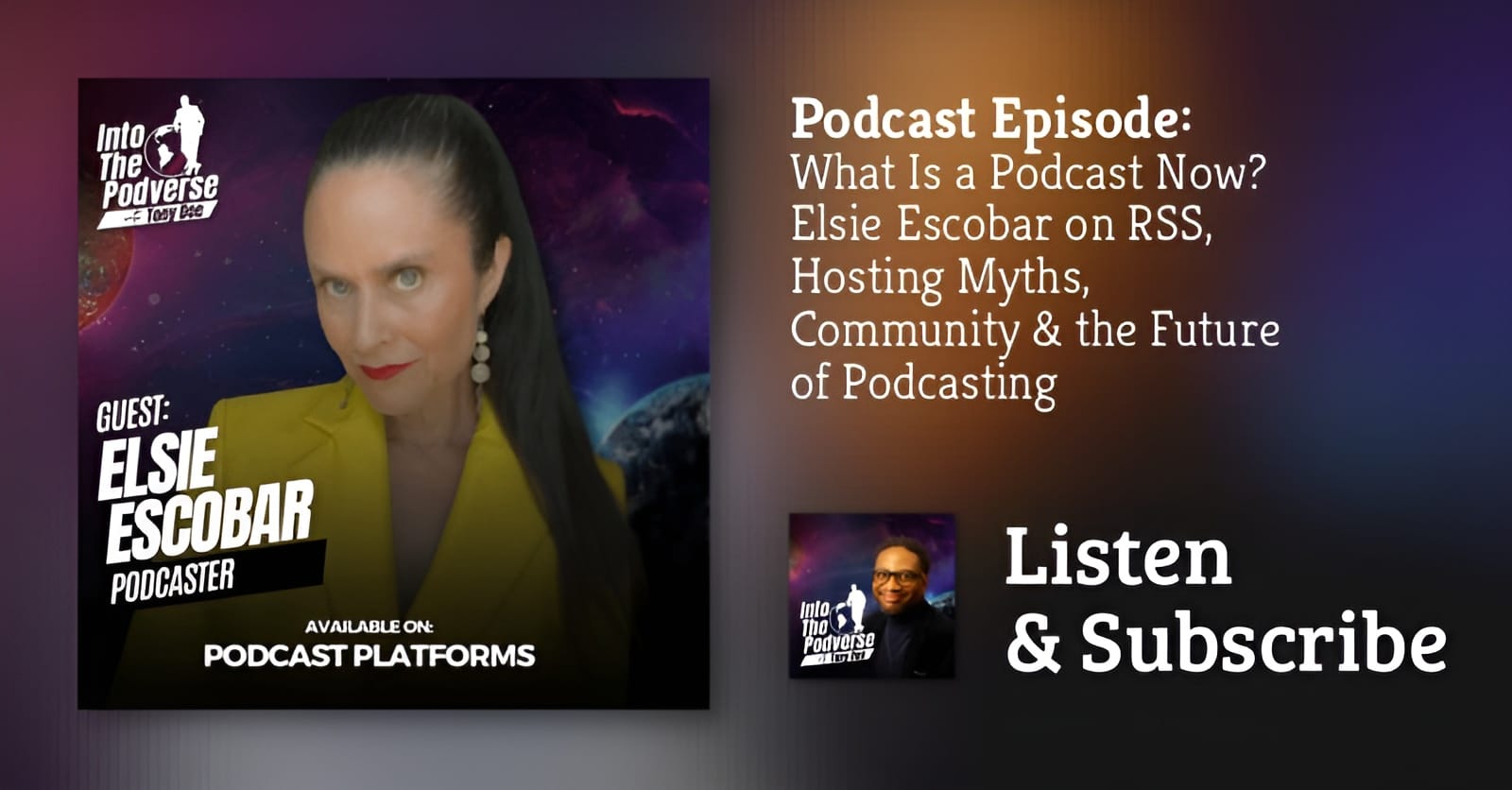
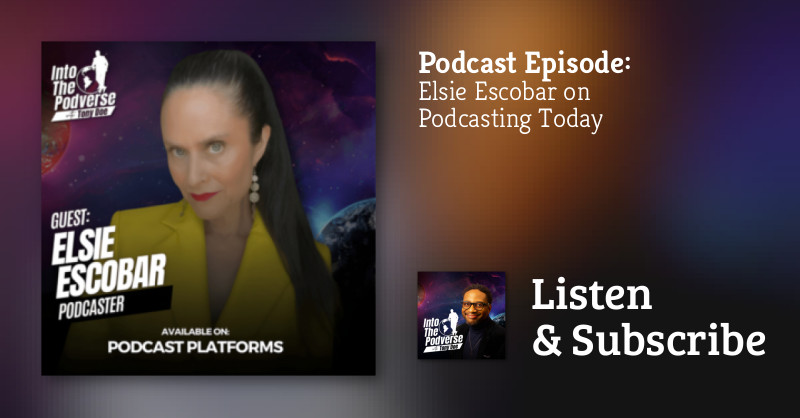
That is why the conversation I recently had on Into the Podverse mattered to me. It was an opportunity to speak without carrying a corporate voice alongside my own, to reflect from the long arc rather than from inside a role.
It felt grounded in the kind of relationship that drew me to podcasting in the first place, where listening and trust still matter more than scale for scale’s sake.
Go listen to Into The Podverse, Tony Doe’s podcast, and I hope you’ll subscribe there. He’s exactly the kind of creator we need more of in this space, and supporting work like his is one of the ways we keep podcasting grounded, human, and worth staying in.
And if any part of this feels familiar to you — especially if you’ve spent years building things that no longer fit the shape of your life — know that there is nothing wrong with what you’ve made.
It’s also okay to want something different now.
Claiming authorship over your voice, your time, and your future is not a rejection of the past. It’s a way of carrying forward what still matters, without leaving yourself behind.
Support my work here in Multimodalee™ by subscribing. I would be honored if you became a paid member, so we can co-create together.
Comments ()